Home modifications and occupational therapists: a guide for Canberra families
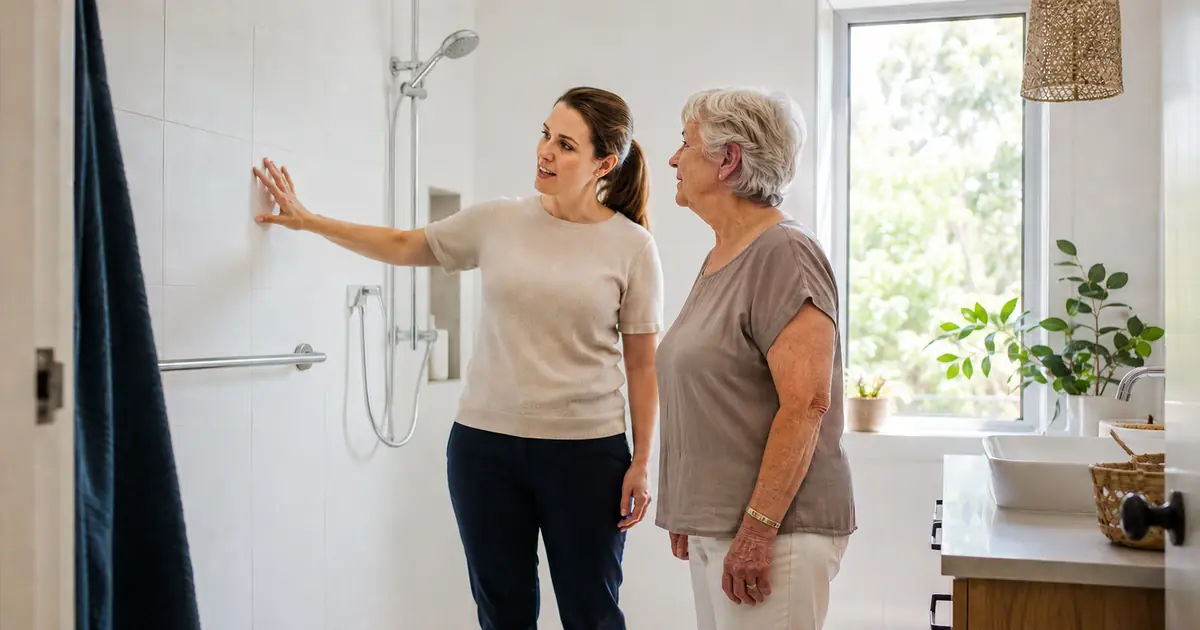
For many Canberra families, the conversation about home modifications starts with an occupational therapist. Maybe your parent has been referred after a fall. Maybe an OT is already part of a care team. Or maybe a GP has suggested an assessment.
If you are not sure how it all fits together, you are not alone. The relationship between occupational therapy and home modifications is not always explained clearly, especially when funding is involved.
This guide explains how the process works in Canberra, what an OT actually does, and what to expect when modifications are recommended.
What does an occupational therapist do?
An occupational therapist (OT) is a health professional who helps people stay as independent as possible in their daily life.
For older Australians, people with disability, and those recovering from illness or injury, an OT can assess how safely someone is managing at home. They look at everyday activities like showering, using the toilet, getting in and out of bed, and moving between rooms.
If the OT identifies safety risks or areas where daily tasks have become harder, they may recommend home modifications as part of the solution.
When does an OT recommend home modifications?
An OT might recommend modifications after:
- A fall or near miss at home
- A hospital discharge assessment
- A change in mobility or health
- A review of an NDIS or aged care plan
- A family member raising concerns about safety
Modifications are not always major works. In many cases, an OT will recommend something straightforward like grab rails in the bathroom, a threshold ramp at the front door, or a handheld shower head.
The goal is to reduce risk and support independence, not to take it away.
What types of modifications does an OT typically recommend?
The modifications an OT recommends depend on the person's needs, the layout of their home, and how they move through it day to day.
Common recommendations include:
- Grab rails in bathrooms, beside toilets, and near beds
- Ramps or threshold ramps at entries and steps
- Non-slip flooring in wet areas
- Lever-style door handles
- Accessible shower or bathroom upgrades
- Handrails on internal and external stairs
For people with more significant access needs, an OT may recommend larger structural changes, such as a full accessible bathroom renovation or a platform lift.
To see the full range of work JPS Services carries out across Canberra and surrounding areas, visit our home modification services page.
How the OT and builder work together
For funded home modifications, the OT and the builder need to work closely together. The OT assesses the person and writes a report recommending specific modifications. The builder provides a detailed quote and carries out the work.
When the OT report and the builder's quote are well aligned from the start, the funding approval process tends to go much more smoothly. Gaps between what the OT recommends and what the builder quotes are one of the most common causes of delays.
At JPS Services, we work alongside OTs regularly across Canberra. We can provide preliminary scope information during the assessment stage, so the recommended works and the quote match up without unnecessary back-and-forth.
If you are an OT or allied health professional looking to refer a client, our allied health referral page explains how we work with referrers and what information we need to get the process started efficiently.
How is funding usually handled?
Many home modifications in Canberra can be funded through government programs. The right pathway depends on the person's age and circumstances.
Support at Home (aged 65 and over): For many older Canberrans, modifications may be funded through the Support at Home program via My Aged Care. An OT assessment is usually required before funding can be approved.
NDIS: For participants with disability under 65, home modifications can be funded through the Capital Supports budget in an NDIS plan. The NDIS requires an OT report explaining why the modifications are reasonable and necessary, along with a detailed builder quote.
DVA: Veterans holding a DVA Gold or White Card may also have modifications funded this way. A conversation with the person's GP is often the quickest way to find out what's possible.
Private: Some families choose to arrange modifications privately. This is often faster, does not always require OT involvement for straightforward work, and may suit families who want to move quickly.
Our funding options page has a detailed breakdown of each pathway and what is involved.
How to get an OT assessment in Canberra
If you or a family member has not yet seen an OT, here are the most common starting points.
For aged care (65 and over): Call My Aged Care on 1800 200 422 or visit myagedcare.gov.au. They can arrange an assessment and connect you with appropriate support.
For NDIS participants: Your support coordinator or Local Area Coordinator (LAC) can help arrange an OT assessment. Some participants self-refer directly to a private OT practice.
Privately: You can contact an occupational therapy practice directly to book a private assessment. Occupational Therapy Australia has a searchable register of practising OTs.
If you are not sure where to start, get in touch and we can have a conversation about where to start.
Common questions
Does an OT assessment cost anything?
For people accessing My Aged Care or NDIS funding, OT assessments are often covered as part of their funded support. For private assessments, fees vary between providers. It is worth calling ahead to confirm costs before booking.
Do I need an OT before contacting JPS Services?
Not necessarily. For private work, you are welcome to contact us directly and we will explain the process from there. If funding is involved, an OT assessment is usually needed before we can proceed with a formal quote.
Can JPS Services suggest an OT?
We work with a number of OTs across Canberra and are happy to help point you in a useful direction. Get in touch and we can have a conversation about where to start.
How long does the process take?
This depends on the funding pathway and the complexity of the work. Straightforward private jobs can often move quickly. Funded pathways, particularly through the NDIS for complex modifications, involve more steps and typically take longer. Our how it works page explains each stage in plain English.
What areas does JPS Services cover?
We work across Canberra and surrounding communities including Tuggeranong, Belconnen, Woden, Gungahlin, Queanbeyan, Murrumbateman, Yass and Bungendore.
Ready to take the next step?
Whether you are a family member trying to understand the process, a carer supporting someone at home, or an OT looking for a Canberra builder to refer clients to, we are here to help.
To understand how a typical project works from first call to completed job, read through our how it works page.
When you are ready, request a quote from JPS Services or get in touch directly. We are happy to talk through whatever stage you are at, at no obligation.