Accessible bathroom renovation in Canberra: what to expect
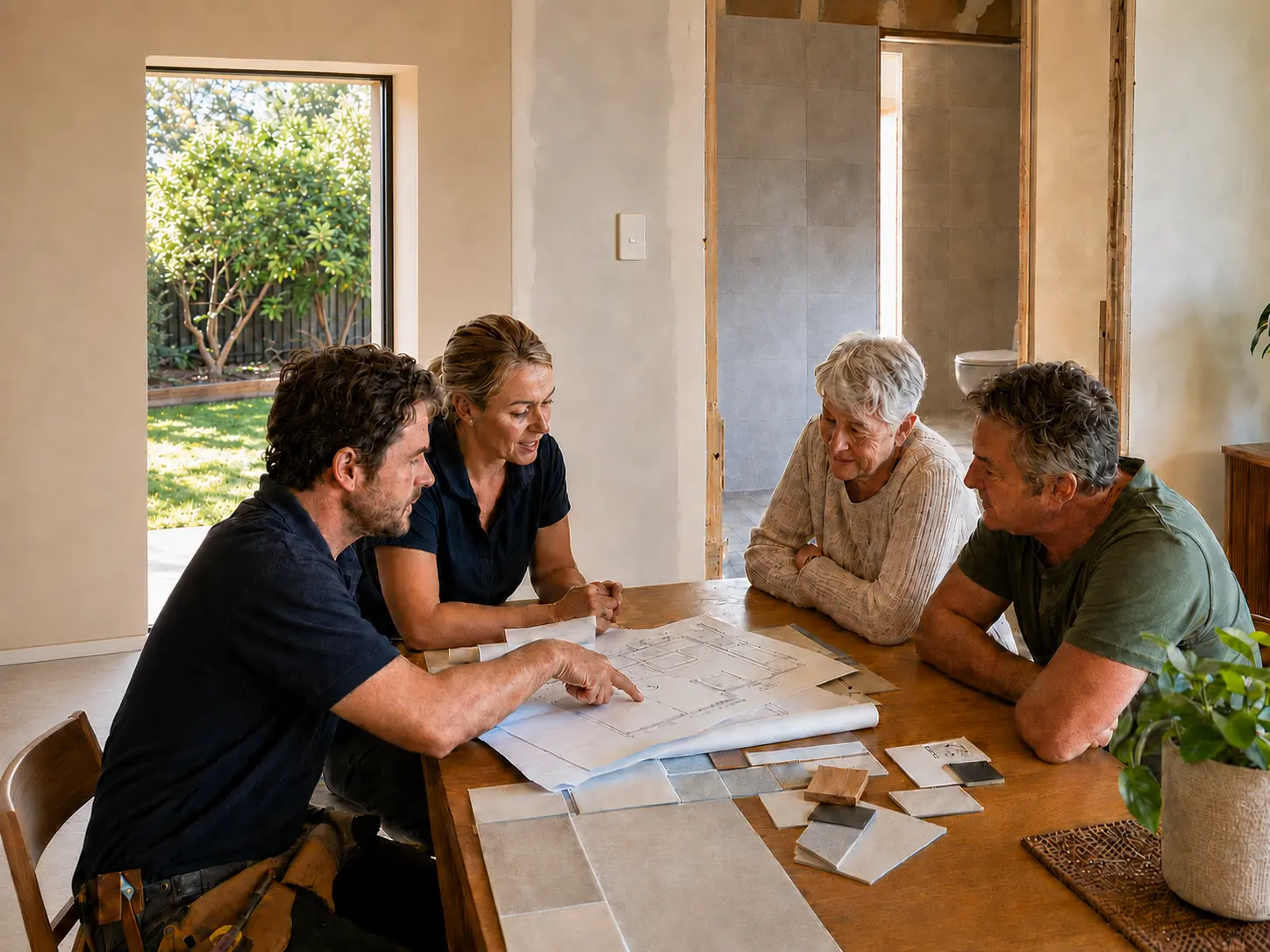
Sometimes a grab rail is enough. But sometimes the bathroom itself needs to change.
For many older Canberrans, people with disability, and their families, the point comes where the existing layout simply does not work safely anymore. The shower has a hob that is becoming impossible to step over. The doorway is too narrow for a frame or wheelchair. The floor drains poorly. These are not problems a rail can fix.
A full accessible bathroom renovation addresses the layout, structure, and fixtures together. This guide explains what that process looks like in Canberra, what compliance standards apply, and how NDIS and aged care funding can help cover the cost.
Already know you need a renovation? Our accessible bathroom renovations page shows what JPS Services includes, from walk-in showers to our free 2D and 3D bathroom design.
When minor modifications are not enough
If you have already looked into grab rails or a shower seat and found that the bathroom itself is the barrier, you are probably at the point where a full renovation makes more sense.
Common signs include:
- A traditional shower with a raised hob or lip that is difficult to step over
- A doorway too narrow for a walking frame, wheelchair, or carer to assist safely
- A bathroom layout that does not allow enough space to transfer, turn, or manoeuvre
- Flooring that drains poorly or becomes slippery when wet
- A shower that cannot safely accommodate a seat or rail in the right position
For people with NDIS funding or aged care support, a full renovation can often be funded where minor modifications would not achieve the required outcome. An occupational therapist assessment is usually the starting point.
If you are at the earlier stage of minor modifications, our bathroom safety modifications guide covers the most common options.
What does an accessible bathroom renovation include?
Every renovation is different, but a full accessible bathroom rebuild in Canberra typically includes some combination of the following.
Hobless shower and wet room conversion
A hobless (step-free) shower removes the raised lip that makes traditional showers difficult and dangerous. The floor is graded to drain without needing a step, and the entry is flush with the rest of the bathroom floor.
For NDIS-funded work, the minimum shower recess size under AS 1428.1 is 1160mm x 1100mm, with a recommended 1500mm x 1500mm where space allows. A wet room layout, where the entire bathroom floor is waterproofed and drained, gives the most flexibility and is often the cleanest outcome.
Doorway widening and turning space
AS 1428.1 requires a minimum clear doorway width of 850mm for accessible bathrooms. Many older Canberra homes have doorways well below this. Widening a doorway is a structural change but is one of the most important modifications for anyone using a frame, wheelchair, or requiring carer assistance.
A turning circle of 1500mm x 1500mm should be available within the bathroom for wheelchair users. This often means repositioning or removing fixtures to create clear floor space.
Toilet and vanity positioning
A comfort-height toilet seat at 450 to 460mm is easier to transfer to and from than a standard toilet. Positioning the toilet correctly in relation to grab rails and clear floor space is important and should be guided by an OT assessment.
Wall-hung vanities at the right height and with knee clearance beneath can support independent use from a seated or wheelchair position.
Non-slip flooring and drainage
Wet area flooring should carry a P4 or P5 slip resistance rating under Australian Standard AS 4586. Proper drainage gradients prevent water pooling and reduce fall risk throughout the bathroom.
Grab rails and shower seats
In a full renovation, grab rails can be installed at the correct structural fixing points from the start, rather than retrofitted. A fold-down shower seat with a minimum static load rating of 120kg gives safe and practical bathing support.
Visit our home modification services page to see the full range of work we carry out.
New homes and the Livable Housing Design Standard
This one causes a bit of confusion, so it is worth being clear about.
The National Construction Code 2022 introduced a Livable Housing Design Standard. For new homes it includes a step-free shower and reinforced walls in the bathroom and toilet, so grab rails can be added later without opening up the wall.
Whether it applies depends on which side of the border you are on. The ACT adopted the standard on 15 January 2024. New South Wales has not adopted these provisions, so it does not apply in Queanbeyan, Yass, Murrumbateman or Bungendore.
Here is the part that matters most. It only applies to new homes. If you are renovating an existing bathroom, you are not required to bring your home up to this standard. The ACT wrote that exemption into its own appendix to the code, so the parts of your home you are not touching stay as they are.
So why mention it at all? Because if your home was built in the ACT after January 2024, your bathroom walls may already be reinforced for grab rails, which can make the job simpler.
How is a full bathroom renovation funded?
A full accessible bathroom renovation typically falls into the category of a complex home modification. Funding options depend on your age and circumstances.
NDIS
For NDIS participants, a full bathroom renovation is funded through the Capital Supports budget as a complex home modification. Complex modifications involve structural changes and usually cost more than $25,000.
The NDIS requires an assessment from a specialised home modification occupational therapist. The approval process for complex modifications typically takes eight to sixteen weeks, so starting early is important.
For more detail on how NDIS home modification funding works, see our NDIS home modifications guide.
Support at Home and aged care
For older Australians aged 65 and over, the Support at Home program includes an Assistive Technology and Home Modifications budget of up to $15,390, indexed each July. This can cover bathroom modifications, though a full structural renovation may exceed this amount.
For more complex or expensive work, a home care package may provide additional funding. A My Aged Care assessment is the starting point. Contact My Aged Care on 1800 200 422 to find out what you are eligible for.
Private
Some families choose to fund the work privately, particularly when they want to move quickly or the modification is not tied to a specific medical need. A privately funded renovation does not require OT approval, though an OT assessment is still recommended to get the layout right.
Our funding guide explains all pathways in detail.
The role of an occupational therapist
An OT assessment is essential for funded renovations and strongly recommended for private work. The OT visits your home, assesses how you move through the space, and recommends specific changes based on your needs.
For NDIS complex modifications, the assessment must be carried out by a specialised home modification OT registered with AHPRA. Not all OTs have this qualification, so it is worth asking when you book.
At JPS Services, we work closely with OTs across Canberra throughout the renovation process. We can provide scope information during the assessment stage to help align the OT recommendations with the builder quote from the start. If you are an OT or allied health professional, our allied health referral page explains how we work with referrers.
Common questions
How long does an accessible bathroom renovation take?
Most accessible bathroom renovations in Canberra take three to six weeks on site, depending on the scope of work. The total project timeline, including OT assessment, funding approval, and quote acceptance, is longer. For NDIS-funded complex modifications, allow eight to sixteen weeks from assessment to approval.
Can I stay at home during the renovation?
This depends on whether the home has another bathroom. For most clients, we plan the work to minimise disruption. We can talk through the options when we visit for the initial quote.
Does the builder need a licence for this work?
Yes. Home modifications in the ACT require a licensed builder. At JPS Services, our builder (William) holds a current ACT and NSW builder licence.
Do I need an OT before I contact JPS Services?
Not necessarily. If you're paying privately, you can call us directly to talk through your bathroom and get a quote moving. If you're using NDIS or aged care funding, you'll need an OT report before we can finalise pricing, since it needs to line up with what's recommended and approved.
What areas does JPS Services cover?
Our service area covers Canberra and stretches out to Queanbeyan, Yass, Murrumbateman and Bungendore, plus all the usual suburbs across Tuggeranong, Belconnen, Woden and Gungahlin.
Ready to plan your bathroom renovation?
A well-planned accessible bathroom renovation can make an enormous difference to safety, independence and confidence at home. Whether you are planning ahead, working through NDIS or aged care funding, or ready to move quickly, JPS Services can help.
Our how it works page explains the process from first call to completed renovation, in plain English.
You can also browse examples of completed bathroom and home modification work on our recent projects page.
To see what is included in a JPS Services renovation, visit our accessible bathroom renovations page.
When you are ready, get in touch with JPS Services for a no-obligation conversation about your project.